
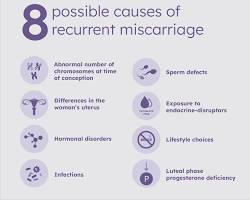
Frequent Miscarriage
In the case of blood loss, pain, or both, transvaginal ultrasound is performed. If a viable intrauterine pregnancy is not found with ultrasound, blood tests (serial βHCG tests) can be performed to rule out ectopic pregnancy, which is a life-threatening situation.[107][108]
If hypotension, tachycardia, and anaemia are discovered, the exclusion of an ectopic pregnancy is important.[108]
A miscarriage may be confirmed by an obstetric ultrasound and by the examination of the passed tissue. When looking for microscopic pathologic symptoms, one looks for the products of conception. Microscopically, these include villi, trophoblast, fetal parts, and background gestational changes in the endometrium. When chromosomal abnormalities are found in more than one miscarriage, genetic testing of both parents may be done.[109]
Ultrasound criteria
A review article in The New England Journal of Medicine based on a consensus meeting of the Society of Radiologists in Ultrasound in America (SRU) has suggested that miscarriage should be diagnosed only if any of the following criteria are met upon ultrasonography visualisation:[110]
| Miscarriage diagnosed | Miscarriage suspected | References |
|---|---|---|
| Crown-rump length of at least 7 mm and no heartbeat. | Crown–rump length of less than 7 mm and no heartbeat. | [110][111] |
| Mean gestational sac diameter of at least 25 mm and no embryo. | Mean gestational sac diameter of 16–24 mm and no embryo. | [110][111] |
| Absence of embryo with heartbeat at least 2 weeks after an ultrasound scan that showed a gestational sac without a yolk sac. | Absence of embryo with heartbeat 7–13 days after an ultrasound scan that showed a gestational sac without a yolk sac. | [110][111] |
| Absence of embryo with heartbeat at least 11 days after an ultrasound scan that showed a gestational sac with a yolk sac. | Absence of embryo with heartbeat 7–10 days after a scan that showed a gestational sac with a yolk sac. | [110][111] |
| Absence of embryo at least 6 weeks after last menstrual period. | [110][111] | |
| Amniotic sac seen adjacent to yolk sac, and with no visible embryo. | [110][111] | |
| Yolk sac of more than 7 mm. | [110][111] | |
| Small gestational sac compared to embryo size (less than 5 mm difference between mean sac diameter and crown-rump length). | [110][111] |
Classification
A threatened miscarriage is any bleeding during the first half of pregnancy.[39] At the investigation, it may be found that the foetus remains viable and the pregnancy continues without further problems.[medical citation needed]
An anembryonic pregnancy (also called an “empty sac” or “blighted ovum”) is a condition where the gestational sac develops normally, while the embryonic part of the pregnancy is either absent or stops growing very early. This accounts for approximately half of miscarriages. All other miscarriages are classified as embryonic miscarriages, meaning that there is an embryo present in the gestational sac. Half of embryonic miscarriages have aneuploidy (an abnormal number of chromosomes).[60]
An inevitable miscarriage occurs when the cervix has already dilated,[112] but the foetus has yet to be expelled. This usually will progress to a complete miscarriage. The foetus may or may not have cardiac activity.

A complete miscarriage is when all products of conception have been expelled; these may include the trophoblast, chorionic villi, gestational sac, yolk sac, and fetal pole (embryo); or later in the pregnancy the foetus, umbilical cord, placenta, amniotic fluid, and amniotic membrane. The presence of a pregnancy test that is still positive, as well as an empty uterus upon transvaginal ultrasonography, does, however, fulfil the definition of pregnancy of unknown location. Therefore, there may be a need for follow-up pregnancy tests to ensure that there is no remaining pregnancy, including ectopic pregnancy.[citation needed]

An incomplete miscarriage occurs when some products of conception have been passed, but some remain inside the uterus.[113] However, an increased distance between the uterine walls on transvaginal ultrasonography may also simply be an increased endometrial thickness and/or a polyp. The use of a Doppler ultrasound may be better in confirming the presence of significant retained products of conception in the uterine cavity.[114] In cases of uncertainty, ectopic pregnancy must be excluded using techniques like serial beta-hCG measurements.[114]

A missed miscarriage is when the embryo or fetus has died, but a miscarriage has not yet occurred. It is also referred to as delayed miscarriage, silent miscarriage, or missed abortion.[30][115]
A septic miscarriage occurs when the tissue from a missed or incomplete miscarriage becomes infected, which carries the risk of spreading infection (sepsis) and can be fatal.[60]
Recurrent miscarriage (“recurrent pregnancy loss” (RPL), “recurrent spontaneous abortion (RSA), or “habitual abortion”) is the occurrence of multiple consecutive miscarriages; the exact number used to diagnose recurrent miscarriage varies; however, two is the minimum threshold to meet the criteria.[116][60][21] If the proportion of pregnancies ending in miscarriage is 15% and assuming that miscarriages are independent events,[117] then the probability of two consecutive miscarriages is 2.25% and the probability of three consecutive miscarriages is 0.34%. The occurrence of recurrent pregnancy loss is 1%.[117] A large majority (85%) of those who have had two miscarriages will conceive and carry normally afterward.[117]
The physical symptoms of a miscarriage vary according to the length of pregnancy, though most miscarriages cause pain or cramping. The size of blood clots and pregnancy tissue that are passed becomes larger with longer gestations. After 13 weeks’ gestation, there is a higher risk of placenta retention.[118]
Prevention
Prevention of a miscarriage can sometimes be accomplished by decreasing risk factors.[11] This may include good prenatal care, avoiding drugs and alcohol, preventing infectious diseases, and avoiding X-rays.[11] Identifying the cause of the miscarriage may help prevent future pregnancy loss, especially in cases of recurrent miscarriage. Often, there is little a person can do to prevent a miscarriage.[11] Vitamin supplementation before or during pregnancy has not been found to affect the risk of miscarriage.[119] Progesterone has been shown to prevent miscarriage in women with 1) vaginal bleeding early in their current pregnancy and 2) a previous history of miscarriage.[120]
Non-modifiable risk factors
Preventing a miscarriage in subsequent pregnancies may be enhanced with assessments of:
- Immune status[9][94]
- Chemical and occupational exposures[54]
- Anatomical defects[99][42]
- Pre-existing or acquired disease in pregnancy[92][47]
- Previous exposure to chemotherapy and radiation
- Medications[44][74][75][76][77][78]
- Surgical history[73]
- Endocrine disorders[53][122][needs update]
- Genetic abnormalities[41][42]
Modifiable risk factors
Maintaining a healthy weight and good prenatal care can reduce the risk of miscarriage.[45] Some risk factors can be minimized by avoiding the following:
- Smoking[51][52][45]
- Cocaine use[51]
- Alcohol[45]
- Poor nutrition
- Occupational exposure to agents that can cause miscarriage[54]
- Medications associated with miscarriage[80][75][45]
- Substance use[45]
Management
Women who miscarry early in their pregnancy usually do not require any subsequent medical treatment, but they can benefit from support and counseling.[38][123] Most early miscarriages will be completed on their own; in other cases, medication treatment or aspiration of the products of conception can be used to remove the remaining tissue.[124] While bed rest has been advocated to prevent miscarriage, this is not of benefit.[125][36] Those who are experiencing or who have experienced a miscarriage benefit from the use of careful medical language. Significant distress can often be managed by the ability of the clinician to clearly explain terms without suggesting that the woman or couple is somehow to blame.[31]
Evidence to support Rho(D) immune globulin after a spontaneous miscarriage is unclear.[126] In the UK, Rho(D) immune globulin is recommended in Rh-negative women after 12 weeks gestational age and before 12 weeks gestational age in those who need surgery or medication to complete the miscarriage.[127]
Methods
No treatment is necessary for a diagnosis of complete miscarriage (so long as ectopic pregnancy is ruled out). In cases of an incomplete miscarriage, empty sac, or missed abortion, there are three treatment options: watchful waiting, medical management, and surgical treatment. With no treatment (watchful waiting), most miscarriages (65–80%) will pass naturally within two to six weeks.[128] This treatment avoids the possible side effects and complications of medications and surgery,[129] but increases the risk of mild bleeding, the need for unplanned surgical treatment, and incomplete miscarriage. Medical treatment usually consists of using misoprostol (a prostaglandin) alone or in combination with mifepristone pre-treatment.[130] These medications help the uterus to contract and expel the remaining tissue out of the body. This works within a few days in 95% of cases.[128] Vacuum aspiration or sharp curettage can be used, with vacuum aspiration being lower-risk and more common.[128]
Delayed and incomplete miscarriage
In delayed or incomplete miscarriage, treatment depends on the amount of tissue remaining in the uterus. Treatment can include surgical removal of the tissue with vacuum aspiration or misoprostol.[131] Studies looking at the methods of anaesthesia for surgical management of incomplete miscarriage have not shown that any adaptation from normal practice is beneficial.[132]
Induced miscarriage
An induced abortion may be performed by a qualified healthcare provider for women who cannot continue the pregnancy.[133] Self-induced abortion performed by a woman or non-medical personnel can be dangerous and is still a cause of maternal mortality in some countries. In some locales, it is illegal or carries heavy social stigma.[134]
Sex
Some organisations recommend delaying sex after a miscarriage until the bleeding has stopped to decrease the risk of infection.[135] However, there is not sufficient evidence for the routine use of antibiotics to try to avoid infection in incomplete abortion.[136] Others recommend delaying attempts at pregnancy until one period has occurred to make it easier to determine the dates of a subsequent pregnancy.[135] There is no evidence that getting pregnant in that first cycle affects outcomes, and an early subsequent pregnancy may improve outcomes.[135][137]
Support
Organisations exist that provide information and counselling to help those who have had a miscarriage.[138] Family and friends often conduct a memorial or burial service. Hospitals can provide support and help memorialise the event. Depending on the locale, others desire to have a private ceremony.[138] Providing appropriate support with frequent discussions and sympathetic counselling is part of the evaluation and treatment. Those who experience unexplained miscarriages can be treated with emotional support.[123][31]
Miscarriage leave
Miscarriage leave is a leave of absence concerning miscarriage. The following countries offer paid or unpaid leave to women who have had a miscarriage.
- The Philippines – 60 days’ fully paid leave for miscarriages (before 20 weeks of gestation) or emergency termination of the pregnancy (on the 20th week or after)[139] The husband of the mother gets seven days’ fully paid leave up to the 4th pregnancy.[140]
- India – six weeks’ leave[141]
- New Zealand – three days’ bereavement leave for both parents[142]
- Mauritius – two weeks’ leave[143]
- Indonesia – six weeks’ leave[143]
- Taiwan – five days, one week, or four weeks, depending on how advanced the pregnancy was[144]
Outcomes
Psychological and emotional effects

Every woman’s personal experience of miscarriage is different, and women who have more than one miscarriage may react differently to each event.[145]
In Western cultures since the 1980s,[145] medical providers assume that experiencing a miscarriage “is a major loss for all pregnant women”.[123] A miscarriage can result in anxiety, depression, or stress for those involved.[108][146][147] It can affect the whole family.[148] Many of those experiencing a miscarriage go through a grieving process.[3][149][150] “Prenatal attachment” often exists that can be seen as parental sensitivity, love and preoccupation directed towards the unborn child.[151] Serious emotional impact is usually experienced immediately after the miscarriage.[3] Some may go through the same loss when an ectopic pregnancy is terminated.[152] In some, the realisation of the loss can take weeks. Providing family support to those experiencing the loss can be challenging because some find comfort in talking about the miscarriage, while others may find the event painful to discuss. The father can have the same sense of loss. Expressing feelings of grief and loss can sometimes be harder for men. Some women can begin planning their next pregnancy after a few weeks of having a miscarriage. For others, planning another pregnancy can be difficult.[138][135] Some facilities acknowledge the loss. Parents can name and hold their infant. They may be given mementos such as photos and footprints. Some conduct a funeral or memorial service. They may express the loss by planting a tree.[153]
Some health organizations recommend that sexual activity be delayed after a miscarriage. The menstrual cycle should resume after about three to four months.[138] Women reported that they were dissatisfied with the care they received from physicians and nurses.[154][needs context]
Subsequent pregnancies
Some parents want to try to have a baby very soon after the miscarriage. The decision to try to become pregnant again can be difficult. Reasons exist that may prompt parents to consider another pregnancy. For older mothers, there may be some sense of urgency. Other parents are optimistic that future pregnancies are likely to be successful. Many are hesitant and want to know about the risk of having another or more miscarriages. Some clinicians recommend that the women have one menstrual cycle before attempting another pregnancy. This is because the date of conception may be hard to determine. Also, the first menstrual cycle after a miscarriage can be much longer or shorter than expected. Parents may be advised to wait even longer if they have experienced late miscarriage or molar pregnancy, or are undergoing tests. Some parents wait for six months based on recommendations from their healthcare provider.[135]
Research shows that depression after a miscarriage or stillbirth can continue for years, even after the birth of a subsequent child. Medical professionals are advised to take previous loss of a pregnancy into account when assessing risks for postnatal depression following the birth of a subsequent infant. It is believed that supportive interventions may improve the health outcomes of both the mother and the child.[155]
The risks of having another miscarriage vary according to the cause. The risk of having another miscarriage after a molar pregnancy is very low. The risk of another miscarriage is highest after the third miscarriage. Pre-conception care is available in some locales.[135]
Later cardiovascular disease
There is a significant association between miscarriage and later development of coronary artery disease, but not cerebrovascular disease.[156][44]
Epidemiology
Around 15% of known pregnancies end in miscarriage, totaling around 23 million miscarriages per year worldwide.[68] Miscarriage rates among all fertilized zygotes are around 30% to 50%.[1][7][60][123] A 2012 review found the risk of miscarriage between 5 and 20 weeks from 11% to 22%.[157] Up to the 13th week of pregnancy, the risk of miscarriage each week was around 2%, dropping to 1% in week 14 and reducing slowly between 14 and 20 weeks.[157]
The precise rate is not known because a large number of miscarriages occur before pregnancies become established and before the woman is aware she is pregnant.[157] Additionally, those with bleeding in early pregnancy may seek medical care more often than those not experiencing bleeding.[157] Although some studies attempt to account for this by recruiting women who are planning pregnancies and testing for very early pregnancy, they still are not representative of the wider population.[157]
In 2010, 50,000 inpatient admissions for miscarriage occurred in the UK.[18]
Society and culture
Society’s reactions to miscarriage have changed over time.[145] In the early 20th century, the focus was on the mother’s physical health and the difficulties and disabilities that miscarriage could produce.[145] Other reactions, such as the expense of medical treatments and relief at ending an unwanted pregnancy, were also heard.[145] In the 1940s and 1950s, people were more likely to express relief, not because the miscarriage ended an unwanted or mistimed pregnancy, but because people believed that miscarriages were primarily caused by birth defects, and miscarrying meant that the family would not raise a child with disabilities.[145] The dominant attitude in the mid-century was that a miscarriage, although temporarily distressing, was a blessing in disguise for the family and that another pregnancy and a healthier baby would soon follow, especially if women trusted physicians and reduced their anxieties.[145] Media articles were illustrated with pictures of babies, and magazine articles about miscarriage ended by introducing the healthy baby—usually a boy—that shortly followed it.[145]
Beginning in the 1980s, miscarriage in the US was primarily framed in terms of the individual woman’s emotional reaction, especially her grief over a tragic outcome.[145] The subject was portrayed in the media with images of an empty crib or an isolated, grieving woman, and stories about miscarriage were published in general-interest media outlets, not just women’s magazines or health magazines.[145] Family members were encouraged to grieve, to memorialize their losses through funerals and other rituals, and to think of themselves as being parents.[145] This shift to recognizing these emotional responses was partly due to medical and political successes, which created an expectation that pregnancies are typically planned and safe, and to women’s demands that their emotional reactions no longer be dismissed by the medical establishments.[145] It also reinforces the anti-abortion movement’s belief that human life begins at conception or early in pregnancy, and that motherhood is a desirable life goal.[145] The modern one-size-fits-all model of grief does not fit every woman’s experience, and an expectation to perform grief creates unnecessary burdens for some women.[145] The reframing of miscarriage as a private emotional experience brought less awareness of miscarriage and a sense of silence around the subject, especially compared to the public discussion of miscarriage during campaigns for access to birth control during the early 20th century, or the public campaigns to prevent miscarriages, stillbirths, and infant deaths by reducing industrial pollution during the 1970s.[145][158]
In places where induced abortion is illegal or carries a social stigma, suspicion may surround miscarriage, complicating an already sensitive issue.
Developments in ultrasound technology (in the early 1980s) allowed them to identify earlier miscarriages.[25]
Legal registration
Miscarriages may be tracked for purposes of health statistics, but they are not usually recorded individually. For example, under UK law, all stillbirths should be registered,[159] although this does not apply to miscarriages. According to French statutes, an infant born before the age of viability, determined to be 28 weeks, is not registered as a ‘child’. If birth occurs after this, the infant is granted a certificate that allows the parents to have a symbolic record of that child. This certificate can include a registered and given name to allow a funeral and acknowledgement of the event.[160][161][162]