
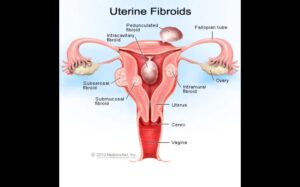
Uterine Fibroid and Adenomyosis.
Definition, Causes, and Symptoms
Uterine Fibroids (Leiomyomas or Myomas) are non-cancerous (benign) growths that develop in the muscular wall of the uterus. Adenomyosis is a condition where the endometrial-like tissue that lines the uterus grows into the muscular wall of the uterus (myometrium).
Causes: Both are linked to estrogen and progesterone hormone levels. Fibroids are thought to develop from hormonal changes, and both conditions typically shrink after menopause. Childbirth is a risk factor for adenomyosis.
Symptoms: Both can cause similar symptoms, notably heavy menstrual bleeding (Menorrhagia) leading to anemia, and severe menstrual cramps (Dysmenorrhea). Fibroids can also cause pelvic pressure or pain, frequent urination, and, depending on size/location, can affect fertility. Adenomyosis often causes diffuse enlargement of the uterus and chronic pelvic pain.
Investigation and Treatment
Investigation: Diagnosis is primarily through pelvic ultrasound (especially transvaginal), which can clearly visualize fibroids and show characteristic signs of adenomyosis. MRI is often used for a more detailed assessment.
Allopathy (Modern Medicine):
Fibroids: Treatment options include observation (for small, asymptomatic ones), medication (NSAIDs for pain, hormonal therapy to reduce bleeding), and surgical/procedural interventions like Myomectomy (removal of fibroids, preserving the uterus), Uterine Artery Embolization (UAE), or Hysterectomy (uterus removal) for severe cases.
Adenomyosis: Treatment includes pain medication, hormonal therapy (birth control pills, IUDs), and Hysterectomy as the definitive cure.
Homeopathy: Aims for constitutional treatment to reduce symptom severity and potentially limit growth, though large or rapidly growing fibroids often require surgical evaluation.
Ayurveda: Both are often categorized as Grathis (tumors/lumps) or Yoni Vyapad. Treatment focuses on balancing Kapha and Vata and reducing abnormal growth through specific heating/drying herbs and internal/external therapies.
Diet Management: A diet to reduce estrogen dominance is often recommended. This includes high-fiber foods to help excrete excess estrogen, limiting red meat and high-fat dairy, and increasing intake of cruciferous vegetables (which support estrogen metabolism). Iron supplementation is vital if heavy bleeding has caused anemia.
Diagnosis is primarily through pelvic ultrasound--->>