
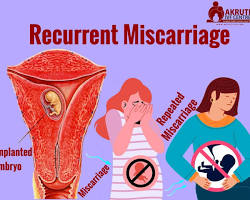
Frequent Miscarriage
Definition: RPL is the loss of two or more consecutive pregnancies before 20 weeks gestation.
Symptoms: Miscarriage symptoms include vaginal bleeding (spotting to heavy), with or without pelvic or lower back cramping, and passing tissue.
Causes: Are complex and include Genetic/Chromosomal abnormalities (most common), Uterine anomalies (septum, fibroids), Endocrine disorders (uncontrolled diabetes, thyroid disease, PCOS), and Immunologic issues (Antiphospholipid Antibody Syndrome – APLS).
Investigation: Thorough investigations are mandatory: genetic testing (karyotyping) of both parents, specialized blood tests (e.g., APLS panel, thyroid function), and imaging (e.g., hysteroscopy, ultrasound) to check uterine structure.
Allopathy Treatment: Treats the underlying cause: surgery for uterine defects, blood thinners (heparin/aspirin) for APLS, and medication for hormonal issues.
Homeopathy Treatment: Used as supportive care to improve overall vitality and reproductive health constitutionally, with remedies selected based on the entire symptom picture.
Ayush Treatment (Ayurveda): Terms this Putraghni Yonivyapad and focuses on purification (Shodhana Karma), balancing Vata and Pitta with specific herbs (Ashwagandha, Shatavari), and nourishing the reproductive tissues.
Diet and Lifestyle: Emphasize maintaining a healthy weight, avoiding smoking/alcohol/excess caffeine, and managing chronic diseases rigorously.
Miscarriage, also known in medical terms as a spontaneous abortion, is an end to pregnancy resulting in the loss and expulsion of an embryo or fetus from the womb before it can survive independently.[1][4] Miscarriage before 6 weeks of gestation is defined as biochemical loss by ESHRE.[13][14] Once ultrasound or histological evidence shows that a pregnancy has existed, the term used is clinical miscarriage, which can be “early” (before 12 weeks) or “late” (between 12 and 21 weeks).[13] Spontaneous fetal termination after 20 weeks of gestation is known as a stillbirth.[15] The term miscarriage is sometimes used to refer to all forms of pregnancy loss and pregnancy with abortive outcomes before 20 weeks of gestation.
The most common symptom of a miscarriage is vaginal bleeding, with or without pain.[1] Tissue and clot-like material may leave the uterus and pass through and out of the vagina.[16] Risk factors for miscarriage include being an older parent, previous miscarriage, exposure to tobacco smoke, obesity, diabetes, thyroid problems, and drug or alcohol use.[7][8] About 80% of miscarriages occur in the first 12 weeks of pregnancy (the first trimester).[1] The underlying cause in about half of cases involves chromosomal abnormalities.[5][1] Diagnosis of a miscarriage may involve checking to see if the cervix is open or sealed, testing blood levels of human chorionic gonadotropin (hCG), and an ultrasound.[10] Other conditions that can produce similar symptoms include an ectopic pregnancy and implantation bleeding.[1]
Prevention is occasionally possible with good prenatal care.[11] Avoiding drugs (including alcohol), infectious diseases, and radiation may decrease the risk of miscarriage.[11] No specific treatment is usually needed during the first 7 to 14 days.[8][12] Most miscarriages will be completed without additional interventions.[8] Occasionally the medication misoprostol or a procedure such as vacuum aspiration is used to remove the remaining tissue.[12][17] Women who have a blood type of rhesus negative (Rh negative) may require Rho(D) immune globulin.[8] Pain medication may be beneficial.[12] Feelings of sadness, anxiety or guilt may occur following a miscarriage.[3][18] Emotional support may help with processing the loss.[12]
Miscarriage is the most common complication of early pregnancy.[19] Among women who know they are pregnant, the miscarriage rate is roughly 10% to 20%, while rates among all fertilisation is around 30% to 50%.[1][7] In those under the age of 35, the risk is about 10% while in those over the age of 40, the risk is about 45%.[1] Risk begins to increase around the age of 30.[7] About 5% of women have two miscarriages in a row.[20] Recurrent miscarriage (also referred to medically as Recurrent Spontaneous Abortion or RSA)[21] may also be considered a form of infertility.[22]
Terminology
Some recommend not using the term “abortion” in discussions with those experiencing a miscarriage to decrease distress.[23] In Britain, the term “miscarriage” has replaced any use of the term “spontaneous abortion” for pregnancy loss and in response to complaints of insensitivity towards women who had suffered such loss.[24] An additional benefit of this change is reducing confusion among medical laymen, who may not realize that the term “spontaneous abortion” refers to a naturally occurring medical phenomenon and not the intentional termination of pregnancy.
The medical terminology applied to experiences during early pregnancy has changed over time.[25] Before the 1980s, health professionals used the phrase spontaneous abortion for a miscarriage and induced abortion for a termination of the pregnancy.[25][26] By the 1940s, the popular assumption that an abortion was an intentional and immoral or criminal action was sufficiently ingrained that pregnancy books had to explain that abortion was the then-popular technical jargon for miscarriages.[27]
In the 1960s, the use of the word miscarriage in Britain (instead of spontaneous abortion) occurred after changes in legislation. In the late 1980s and 1990s, doctors became more conscious of their language about early pregnancy loss. Some medical authors advocated a change to the use of miscarriage instead of spontaneous abortion because they argued this would be more respectful and help ease a distressing experience.[28][29] The change was being recommended in Britain in the late 1990s.[29] In 2005 the European Society for Human Reproduction and Embryology (ESHRE) published a paper aiming to facilitate a revision of nomenclature used to describe early pregnancy events.[30]
Most affected women and family members refer to miscarriage as the loss of a baby, rather than an embryo or fetus, and healthcare providers are expected to respect and use the language that the person chooses.[31] Clinical terms can suggest blame, increase distress, and even cause anger. Terms that are known to cause distress in those experiencing miscarriage include:
- abortion (including spontaneous abortion) rather than miscarriage,
- habitual aborter rather than a woman experiencing recurrent pregnancy loss,
- products of conception rather than baby,
- blighted ovum rather than early pregnancy loss or delayed miscarriage,
- cervical incompetence rather than cervical weakness, and
- evacuation of retained products of conception (ERPC) rather than surgical management of miscarriage.[31]
Using the word abortion for an involuntary miscarriage is generally considered confusing, “a dirty word”, “stigmatized”, and “an all-around hated term”.[27]
Pregnancy loss is a broad term that is used for miscarriage, ectopic and molar pregnancies.[31] The term foetal death applies variably in different countries and contexts, sometimes incorporating weight, and gestational age from 16 weeks in Norway, 20 weeks in the US and Australia, 24 weeks in the UK to 26 weeks in Italy and Spain.[32][33][34] A foetus that died before birth after this gestational age may be referred to as a stillbirth.[32]
Signs and symptoms
Signs of a miscarriage include vaginal spotting, abdominal pain, cramping, fluid, blood clots, and tissue passing from the vagina.[35][36][37] Bleeding can be a symptom of miscarriage, but many women also have bleeding in early pregnancy and do not miscarry.[38] Bleeding during the first half of pregnancy may be referred to as a threatened miscarriage.[39] Of those who seek treatment for bleeding during pregnancy, about half will miscarry.[40] Miscarriage may be detected during an ultrasound exam or through serial human chorionic gonadotropin (HCG) testing.
Risk factors
Miscarriage may occur for many reasons, not all of which can be identified. Risk factors are those things that increase the likelihood of having a miscarriage but do not necessarily cause a miscarriage. Up to 70 conditions,[1][5][41][42][43][44] infections,[45][46][47] medical procedures,[48][49][50] lifestyle factors,[7][8][51][45][52] occupational exposures,[11][53][54] chemical exposure,[54] and shift work are associated with increased risk for miscarriage.[55] Some of these risks include endocrine, genetic, uterine, or hormonal abnormalities, reproductive tract infections, and tissue rejection caused by an autoimmune disorder.[56]
Trimesters
First trimester
| Description | Proportion of total |
|---|---|
| Normal | 45–55% |
| Autosomal trisomy | 22–32% |
| Monosomy X (45, X) | 5–20% |
| Triploidy | 6–8% |
| Structural abnormality of the chromosome |
2% |
| Double or triple trisomy | 0.7–2.0%[57] |
| Translocation | Unknown[58] |
Most clinically apparent miscarriages (two-thirds to three-quarters in various studies) occur during the first trimester.[1][45][59][60] About 30% to 40% of all fertilised eggs miscarry, often before the pregnancy is known.[1] The embryo typically dies before the pregnancy is expelled; bleeding into the decidua basalis and tissue necrosis cause uterine contractions to expel the pregnancy.[60] Early miscarriages can be due to a developmental abnormality of the placenta or other embryonic tissues. In some instances, an embryo does not form but other tissues do. This has been called a “blighted ovum“.[61][62][57]
Successful implantation of the zygote into the uterus is most likely eight to ten days after fertilization. If the zygote has not been implanted by day ten, implantation becomes increasingly unlikely in subsequent days.[63]
A chemical pregnancy is a pregnancy that was detected by testing but ends in miscarriage before or around the time of the next expected period.[64]
Chromosomal abnormalities are found in more than half of embryos miscarried in the first 13 weeks. Half of embryonic miscarriages (25% of all miscarriages) have an aneuploidy (abnormal number of chromosomes).[65] Common chromosome abnormalities found in miscarriages include an autosomal trisomy (22–32%), monosomy X (5–20%), triploidy (6–8%), tetraploidy (2–4%), or other structural chromosomal abnormalities (2%).[60] Genetic problems are more likely to occur with older parents; this may account for the higher rates observed in older women.[66]
Luteal phase progesterone deficiency may or may not be a contributing factor to miscarriage.[67]
Second and third trimesters
Second-trimester losses may be due to maternal factors such as uterine malformation, growths in the uterus (fibroids), or cervical problems.[45] These conditions also may contribute to premature birth.[59] Unlike first-trimester miscarriages, second-trimester miscarriages are less likely to be caused by a genetic abnormality; chromosomal aberrations are found in a third of cases.[60] Infection during the third trimester can cause a miscarriage.[45]
Age
Miscarriage is least common for mothers in their twenties, for whom around 12% of known pregnancies end in miscarriage.[68] Risk rises with age: around 14% for women aged 30–34; 18% for those 35–39; 37% for those 40–44; and 65% for those over 45.[68] Women younger than 20 have slightly increased miscarriage risk, with around 16% of known pregnancies ending in miscarriage.[68]
Miscarriage risk also rises with paternal age, although the effect is less pronounced than for maternal age. The risk is lowest for men under 40 years old. For men aged 40-44, the risk is around 23% higher. For men over 45, the risk is 43% higher.[69]
Obesity, eating disorders and caffeine
Not only is obesity associated with miscarriage; it can result in sub-fertility and other adverse pregnancy outcomes. Recurrent miscarriage is also related to obesity. Women with bulimia nervosa and anorexia nervosa may have a greater risk for miscarriage. Nutrient deficiencies have not been found to impact miscarriage rates but hyperemesis gravidarum sometimes precedes a miscarriage.[53]
Caffeine consumption also has been correlated to miscarriage rates, at least at higher levels of intake.[45] However, such higher rates are statistically significant only in certain circumstances.
Vitamin supplementation has generally not shown to be effective in preventing miscarriage.[70] Chinese traditional medicine has not been found to prevent miscarriage.[37]
Endocrine disorders
Disorders of the thyroid may affect pregnancy outcomes. Related to this, iodine deficiency is strongly associated with an increased risk of miscarriage.[53] The risk of miscarriage is increased in those with poorly controlled insulin-dependent diabetes mellitus.[53] Women with well-controlled diabetes have the same risk of miscarriage as those without diabetes.[71][72]
Food poisoning
Ingesting food that has been contaminated with listeriosis, toxoplasmosis, and salmonella is associated with an increased risk of miscarriage.[45][22]
Amniocentesis and chorionic villus sampling
Amniocentesis and chorionic villus sampling (CVS) are procedures conducted to assess the fetus. A sample of amniotic fluid is obtained by the insertion of a needle through the abdomen and into the uterus. Chorionic villus sampling is a similar procedure with a sample of tissue removed rather than fluid. These procedures are not associated with pregnancy loss during the second trimester but they are associated with miscarriages and birth defects in the first trimester.[50] Miscarriage caused by invasive prenatal diagnosis (chorionic villus sampling (CVS) and amniocentesis) is rare (about 1%).[49]
Surgery
The effects of surgery on pregnancy are not well-known including the effects of bariatric surgery. Abdominal and pelvic surgery are not risk factors for miscarriage. Ovarian tumours and cysts that are removed have not been found to increase the risk of miscarriage. The exception to this is the removal of the corpus luteum from the ovary. This can cause fluctuations in the hormones necessary to maintain the pregnancy.[73]
Medications
There is no significant association between antidepressant medication exposure and miscarriage.[74] The risk of miscarriage is not likely decreased by discontinuing SSRIs before pregnancy.[75] Some available data suggest that there is a small increased risk of miscarriage for women taking any antidepressant,[76][77] though this risk becomes less statistically significant when excluding studies of poor quality.[74][78]
Medicines that increase the risk of miscarriage include:
- retinoids
- nonsteroidal anti-inflammatory drugs (NSAIDs), such as ibuprofen
- misoprostol
- methotrexate[45]
- statins[79]
Immunisations
Immunisations have not been found to cause miscarriage.[80] Live vaccinations, like the MMR vaccine, can theoretically cause damage to the fetus as the live virus can cross the placenta and potentially increase the risk for miscarriage.[81][82] Therefore, the Center for Disease Control (CDC) recommends against pregnant women receiving live vaccinations.[83] However, there is no clear evidence that has shown live vaccinations increase the risk of miscarriage or fetal abnormalities.[82]
Some live vaccinations include: MMR, varicella, certain types of the influenza vaccine, and rotavirus.[84][85]
Treatments for cancer
Ionising radiation levels given to a woman during cancer treatment cause miscarriage. Exposure can also impact fertility. The use of chemotherapeutic drugs to treat childhood cancer increases the risk of future miscarriage.[53]
Pre-existing diseases
Several pre-existing diseases in pregnancy can potentially increase the risk of miscarriage, including diabetes, endometriosis, polycystic ovary syndrome (PCOS), hypothyroidism, certain infectious diseases, and autoimmune diseases. Women with endometriosis report a 76%[86] to 298%[87] increase in miscarriages versus their non-afflicted peers, the range affected by the severity of their disease. PCOS may increase the risk of miscarriage.[45] Two studies suggested treatment with the drug metformin significantly lowers the rate of miscarriage in women with PCOS,[88][89] but the quality of these studies has been questioned.[90] Metformin treatment in pregnancy is not safe.[91] In 2007, the Royal College of Obstetricians and Gynaecologists also recommended against the use of the drug to prevent miscarriage.[90] Thrombophilias or defects in coagulation and bleeding were once thought to be a risk of miscarriage but have been subsequently questioned.[92] Severe cases of hypothyroidism increase the risk of miscarriage. The effect of milder cases of hypothyroidism on miscarriage rates has not been established. A condition called luteal phase defect (LPD) is a failure of the uterine lining to be fully prepared for pregnancy. This can keep a fertilised egg from implanting or result in miscarriage.[93]
Mycoplasma genitalium infection is associated with an increased risk of preterm birth and miscarriage.[47]
Infections can increase the risk of a miscarriage: rubella (German measles), cytomegalovirus, bacterial vaginosis, HIV, chlamydia, gonorrhoea, syphilis, and malaria.[45]
Immune status
Autoimmunity is a possible cause of recurrent or late-term miscarriages. In the case of an autoimmune-induced miscarriage, the woman’s body attacks the growing fetus or prevents normal pregnancy progression.[9][94] Autoimmune disease may cause abnormalities in embryos, which in turn may lead to miscarriage. As an example, coeliac disease increases the risk of miscarriage by an odds ratio of approximately 1.4.[43][44] A disruption in normal immune function can lead to the formation of antiphospholipid antibody syndrome. This will affect the ability to continue the pregnancy, and if a woman has repeated miscarriages, she can be tested for it.[54] Approximately 15% of recurrent miscarriages are related to immunologic factors.[95] The presence of anti-thyroid autoantibodies is associated with an increased risk with an odds ratio of 3.73 and 95% confidence interval 1.8–7.6.[96] Having lupus also increases the risk of miscarriage.[97] Immunohistochemical studies on decidual basalis and chorionic villi found that the imbalance of the immunological environment could be associated with recurrent pregnancy loss.[98]
Anatomical defects and trauma
Fifteen per cent of women who have experienced three or more recurring miscarriages have some anatomical defect that prevents the pregnancy from being carried for the entire term.[99] The structure of the uterus affects the ability to carry a child to term. Anatomical differences are common and can be congenital.[100]
| Type of uterine structure |
Miscarriage rate associated with defect |
References |
|---|---|---|
| Bicornate uterus | 40–79% | [41][42] |
| Septate or unicornate | 34–88% | [41] |
| Arcuate | Unknown | [41] |
| Didelphys | 40% | [41] |
| Fibroids | Unknown | [45] |
In some women, cervical incompetence or cervical insufficiency occurs with the inability of the cervix to stay closed during the entire pregnancy.[46][45] It does not cause first-trimester miscarriages. In the second trimester, it is associated with an increased risk of miscarriage. It is identified after a premature birth has occurred at about 16–18 weeks into the pregnancy.[99] During the second trimester, major trauma can result in a miscarriage.[44]
Smoking
Tobacco (cigarette) smokers have an increased risk of miscarriage.[51][45] There is an increased risk regardless of which parent smokes, though the risk is higher when the gestational mother smokes.[52]
Morning sickness
Nausea and vomiting of pregnancy (NVP, or morning sickness) are associated with a decreased risk. Several possible causes have been suggested for morning sickness but there is still no agreement.[101] NVP may represent a defence mechanism which discourages the mother’s ingestion of foods that are harmful to the fetus; according to this model, a lower frequency of miscarriage would be an expected consequence of the different food choices made by women experiencing NVP.[102]
Chemicals and occupational exposure
Chemical and occupational exposures may have some effect on pregnancy outcomes.[103] A cause-and-effect relationship can rarely be established. Those chemicals that are implicated in increasing the risk for miscarriage are DDT, lead,[104] formaldehyde, arsenic, benzene and ethylene oxide. Video display terminals and ultrasound have not been found to affect the rates of miscarriage. In dental offices where nitrous oxide is used with the absence of anaesthetic gas scavenging equipment, there is a greater risk of miscarriage. For women who work with cytotoxic antineoplastic chemotherapeutic agents, there is a small increased risk of miscarriage. No increased risk for cosmetologists has been found.[54]